


Blog ThriftyEvents.net is a search phrase people use when looking for the event-planning articles associated with ThriftyEvents.net. The plural-domain website presents budget-conscious event ideas, DIY inspiration and planning advice. It should be approached as reading material: an article about venues or suppliers is not proof that a booking, quotation or managed planning service is available.
One detail matters before you begin. This article appears on ThriftyEvent.net, without the final “s” in “events”; ThriftyEvents.net is a different domain. Similar names alone do not establish shared ownership. This guide explains how to navigate the subject, evaluate useful advice and turn a reading session into decisions for your own celebration.
What to look for in Blog ThriftyEvents.net
Start with the question you actually need to answer. A host arranging a birthday meal needs different information from a volunteer organising an outdoor fundraiser. Search for the event type and the decision together: guest numbers and catering, room layout and accessibility, or decorations and installation time. A specific question makes it easier to recognise an article that deserves your attention.

The plural-domain homepage displays sections for budgeting, DIY ideas and event planning. That organisation can help you find a starting point, but a category label does not independently validate everything within it. Read the full article rather than treating an attractive heading or photograph as the recommendation itself.
A useful post should explain its assumptions. Ask whether the suggested venue already includes furniture, whether volunteers are available and whether the event is indoors. Advice becomes less transferable when those conditions are missing. Write down any assumption that would change the cost or workload of using the idea yourself.
Separate an appealing idea from a workable plan
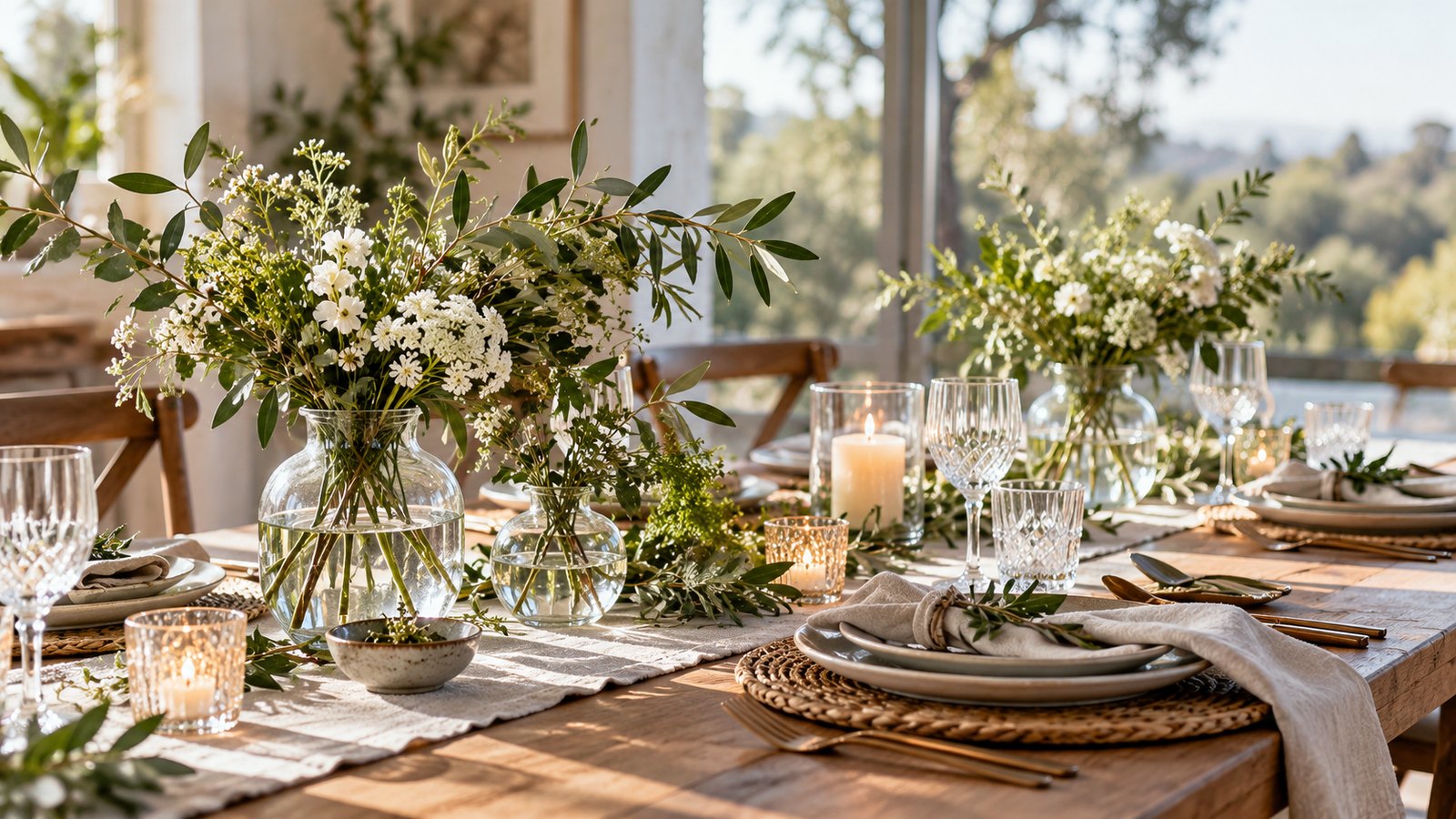
Inspiration answers what an event might look like. Planning answers who will make it happen, what it requires and when it must be ready. Keep these as separate columns in your notes. A flower arrangement might be attractive while still being impractical for a room that offers only a short setup window.
For each saved idea, record materials, preparation time, transport needs and a named owner. Add a decision date so the task cannot remain open indefinitely. If nobody can take responsibility for it, treat the idea as optional until the basic event is organised. This prevents a collection of appealing possibilities from becoming an unmanageable commitment.
Consider a simple table display. Before buying supplies, make one complete sample using the actual container, table covering and lighting conditions. Check stability and sightlines, then pack and unpack it once. This original planning exercise tells you more about feasibility than counting objects in a photograph. It also reveals whether the design can be stored and reused.
Read cost claims with the right questions
A stated price is useful only when you understand what it includes. Delivery, collection, cleaning, equipment and staffing can change the comparison between two apparently similar offers. Ask suppliers for a written description of the scope and keep the response with your event notes. Do not use an article’s example figure as a current local quotation.
Build your budget around commitments rather than guesses. Distinguish an estimate from an accepted quote, a deposit from a full payment and a refundable item from a non-refundable purchase. These differences affect how much room remains for new decisions. A lower headline price does not help if essential extras arrive later.
Leave a separate space for unresolved costs. Instead of choosing an arbitrary saving percentage, identify what could still change: final attendance, overtime, weather protection or transport. Ask who can approve additional spending. A clear approval rule is often more useful than a complicated worksheet nobody maintains.
Use independent guidance for consequential decisions
Lifestyle articles can suggest themes and workflows, but organisers should verify operational requirements separately. The Health and Safety Executive’s event guidance is a primary reference for planning responsibilities in Great Britain. Use relevant local authority and venue information for your location rather than assuming a general blog covers every situation.
Food deserves its own check. The Food Standards Agency publishes guidance for community and charity events. Follow the current advice applicable to your activity, and ask the relevant local authority when registration or other requirements are unclear. An article’s menu idea does not establish that storage, preparation or allergen arrangements are appropriate.
Keep a small source log: the page, the decision it informed and the date you checked it. This is especially helpful when a team member asks why a supplier was selected or why an activity was changed. The aim is practical accountability, not an elaborate research project for every decoration.
Create a reading list that leads to action
Save only articles that answer an open question. Give each bookmark a short purpose such as “compare venue inclusions” or “test reusable centrepieces”. Group your reading into decisions to make now, decisions that depend on another choice and ideas for a later event. This makes the list manageable.
After reading, write one action in your own words. It might be requesting a revised quotation, checking a room’s access arrangements or testing the setup with the person who will install it. If an article produces no action or clearer understanding, it may be inspiration rather than a planning reference. Both can be enjoyable, but they serve different purposes.
Before event day, replace the reading list with a short operational document containing confirmed timings, contacts, responsibilities and outstanding questions. Volunteers should not need to search through bookmarked articles to discover what they are expected to do. Keep the longer research folder available for context while the live plan stays concise.
Questions readers often ask
Is Blog ThriftyEvents.net a separate company?
The wording alone does not establish a company or separate service. It is best understood as a search phrase unless a specific page provides verifiable details about the entity being described.
Are ThriftyEvent.net and ThriftyEvents.net the same address?
No. The extra “s” changes the domain. Check the browser address whenever you move between similarly named websites, and do not infer an organisational relationship from the names.
Can I book an event through an article?
Reading a post is not a booking. Confirm any service directly through an explicitly identified provider and obtain written terms before making a commitment or sending payment.
What should I do after finding a useful idea?
Record the exact article link, identify the decision it helps with and test the idea against your event’s space, resources and timetable. Keep only the version that your team can actually deliver.
Primary references and further reading
ThriftyEvents.net: the plural-domain content website
Food Standards Agency: community food guidance
Related guides on this website
lcfgamevent hosted event from lyncconf: Planning and Registration Checks

4 Comments
Pingback: Posts ThriftyEvents.net: Find and Organise Useful Articles
Pingback: Start ThriftyEvents.net: Your First Event Planning Steps
Pingback: lcfgamevent hosted event from lyncconf: Planning and Registration Checks
Pingback: Zingyzon SEO: Choosing a Provider