

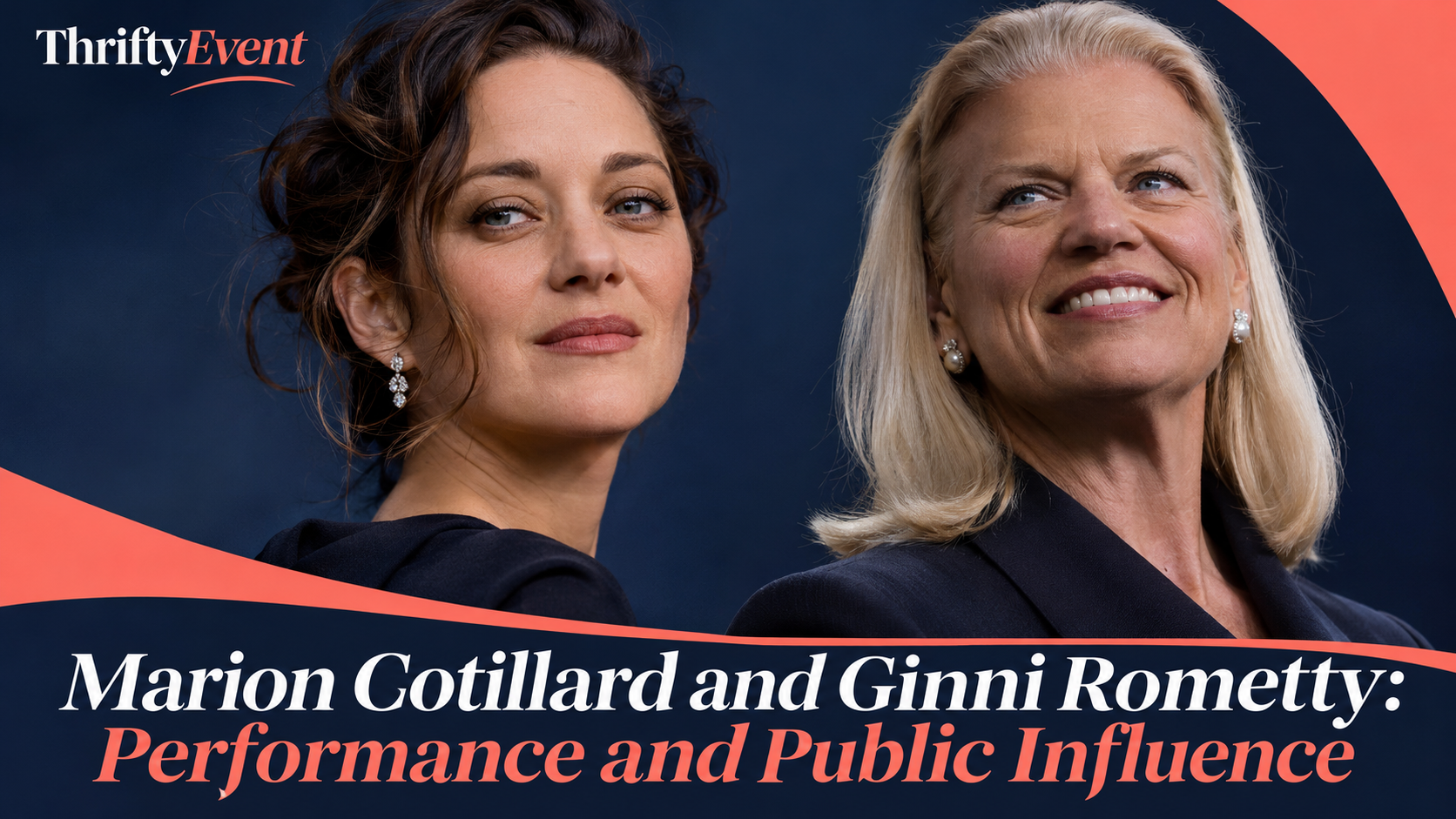
Marion Cotillard and Ginni Rometty are associated with different forms of public influence: Cotillard through acting, and Rometty through her former leadership of IBM. Their names together do not establish a shared project or personal relationship. A useful comparison examines how creative recognition and corporate responsibility are documented, and why the two should not be measured in the same way.
The distinction is important because public profiles often move too quickly from achievement to reputation and then to unsupported claims about wealth or influence. An acting award, a corporate appointment and a philanthropic commitment are different facts. Each needs its own evidence, and none automatically establishes expertise or authority in an unrelated field.
Begin with Cotillard’s recognised performance
The Academy’s 2008 ceremony record identifies Cotillard as the leading-actress winner for La Vie en Rose. That is a specific, verifiable achievement. It connects her recognition to a particular film rather than relying on a general claim that she is an acclaimed performer.
A biographical performance involves interpretation. An actor works within a script, a production and a director’s approach to create a person the audience can experience on screen. The result can prompt viewers to learn more about the historical subject, but it should not replace historical research. A film’s dramatic choices and a person’s full life story are not identical records.
Keeping this distinction clear improves the discussion of Cotillard’s work. Critics can examine expression, voice, movement and the relationship between scenes without turning their interpretation into a claim about the actor’s private character. The person performing and the person portrayed remain separate, even when a performance creates a strong impression of closeness.
Rometty’s public record is institutional
IBM’s former-CEO record identifies Rometty as a former chairman, president and chief executive. That wording matters: she is not IBM’s current CEO. Her public career should be described with a timeline, rather than borrowing an old title from material published during her tenure.
An executive’s work is evaluated through an organisation that continues beyond any individual appointment. Products, services, customers and employees remain part of the business through changes of leadership. The executive has substantial responsibility, but the company’s activities cannot be reduced to a personal performance. Decisions take effect through teams, processes and relationships.
This creates a different evidence base from film criticism. Appointment records establish formal roles, while financial and operating reports help assess corporate outcomes. A company’s own description of a strategy is relevant, but it is not automatically an independent evaluation of that strategy’s success. Clear attribution helps readers understand the difference.
Marion Cotillard and Ginni Rometty: recognition versus authority
An award recognises work under the rules and judgements of the awarding institution. A chief executive appointment grants responsibilities within a corporate governance structure. Both can bring visibility, but they do not provide the same kind of authority. A performer recognised for a film does not thereby become a corporate decision-maker, and an executive title does not establish artistic expertise.
Public influence can extend beyond formal roles, but that broader influence should still be described carefully. A speech, campaign or endorsement needs its own record. The fact that a person is widely known does not prove that every public statement changes behaviour or produces a measurable outcome. Visibility and demonstrated effect are related subjects, not interchangeable facts.
The most useful comparison therefore asks where each person has a documented contribution. For Cotillard, this article uses a verified acting achievement. For Rometty, it uses a verified corporate leadership history. The comparison is an interpretation of those separate records, not a discovery of an undocumented shared venture.
The collaboration behind individual recognition
Film gives audiences a visible performance, but the production also depends on writing, directing, editing, sound, design and many other kinds of work. An acting award can celebrate an individual without implying that the individual made the film alone. Recognising the collaborative context makes the achievement more understandable, not less significant.
Corporate results also emerge from collaboration. A public-facing leader may explain a decision, while implementation depends on people across the organisation. Customers and market conditions influence outcomes too. A fair profile identifies responsibility without assuming that every result can be traced to one person in a simple line of cause and effect.
This is especially useful when coverage becomes celebratory or critical. Success can encourage a story of exceptional individual control; failure can encourage the reverse. Neither narrative should outrun the evidence. The reader needs to know what the person actually decided, what others contributed and which parts of the outcome remain uncertain.
How a public image can simplify a complicated career
A memorable film role can become shorthand for an actor’s wider body of work. A major corporate transition can become shorthand for an executive’s tenure. These reference points help readers orient themselves, but they are incomplete. A serious profile uses them as an entry point rather than pretending one milestone explains every professional decision.
That principle also applies to photographs. A portrait identifies the subject; it does not prove participation in a specific event or endorsement. When two portraits appear in a comparison cover, the layout should keep them clearly separate unless a shared occasion is verified. The image should help explain the article rather than introduce a misleading visual story.
Why money is a separate reporting problem
A film’s ticket sales are not the lead actor’s personal earnings. A technology company’s sales are not its chief executive’s private wealth. Compensation, ownership interests, taxes, liabilities and valuation dates would all matter to a financial profile. Without those distinctions, a wealth comparison can be numerically precise while conceptually wrong.
Private contracts can also be reported incompletely, and public-company remuneration can include components whose value depends on accounting rules or later conditions. The appropriate response is to explain what a figure measures, not to treat every available amount as interchangeable. This article does not claim a complete personal wealth calculation for either subject.
What readers should check before sharing a claim
First, check the person’s identity and the date of the source. Second, make sure the link supports the exact statement next to it. A reliable biography may establish a career role without establishing a rumoured relationship. Third, distinguish an organisation’s own account from independent assessment, especially when the language describes success or influence.
These habits are useful beyond celebrity profiles. ThriftyEvent’s Tomoson safety guide and hosting-review evidence article provide related reading about evaluating claims and sources. They are not evidence of an affiliation with Cotillard or Rometty.
The practical outcome is a more grounded understanding of both careers. Cotillard’s acting recognition and Rometty’s executive history can each be described accurately without forcing them into a fabricated shared narrative. Readers get a clearer answer when the article states what the comparison means and leaves unsupported connections out of the account.
Readers should also preserve the distinction between an interpretation and a reported fact when sharing excerpts. A comparison of working methods is the writer’s analysis; an award result or retirement date is a checkable record.
Frequently asked questions
Have Marion Cotillard and Ginni Rometty collaborated?
The sources reviewed for this article do not establish a collaboration. Their careers are discussed independently and compared analytically.
Which film earned Marion Cotillard her leading-actress Oscar?
She won for La Vie en Rose at the 2008 Academy Awards. The Academy’s official record verifies the result.
Is Ginni Rometty a current IBM executive?
IBM identifies her as a former chairman, president and CEO. Historical titles should not be presented as current appointments.
Does an acting award establish business expertise?
No. It recognises work within a creative field. Claims about business activity or expertise need separate evidence.
Why is there no personal net-worth ranking?
The verified sources used here establish professional achievements and roles, not complete personal assets and liabilities. Company or film revenue cannot supply the missing information.
