

“Ohio champion trees delaware county usd lewis center” is best approached as a local tree-research query, not as a confirmed event listing. A successful outing needs current access information as well as an interesting historical record.
The reviewed Ohio listing includes a Delaware County eastern cottonwood, but this article does not confirm a present-day route to that individual tree. Check with the relevant land manager before planning a trip around it.
Ohio champion trees Delaware County USD Lewis Center: start with the place
Use Delaware County, Ohio as the geographic reference. Lewis Center is the local search term, but the reviewed evidence does not establish what “USD” means in this phrase. Do not book an activity or contact a school on the assumption that it names an official programme.
When a search returns a tree in the State of Delaware, discard it from the Ohio itinerary unless you are deliberately researching both places. Similar names are an easy source of wasted travel planning. Write the state and county together in your notes.
Make the record an interest, not a promise
The indexed ODNR native-tree listing contains an eastern cottonwood entry for Delaware County. Its direct page was unavailable in this review on 28 October 2026, so it cannot serve as confirmation of current condition or visitor access.
A flexible nature outing should still be worthwhile if the individual specimen cannot be visited. Plan around a verified public walking area and the opportunity to observe trees generally. Make a champion-tree stop optional until its location and access are confirmed.
This also keeps expectations realistic for children or a mixed-interest group. A record tree may be impressive, but a long search without a clear route can be frustrating. Agree in advance how much time you will spend trying to find a specific feature.
Keep the outing simple and affordable
Set a modest plan with a meeting point, a finish time and a weather alternative. Bring the supplies your group normally needs for a short walk rather than buying specialist measuring equipment immediately. A notebook and photographs can support observation without turning the day into a formal survey.
Check transport, parking arrangements and any relevant entry conditions with the current operator. Do not assume a historical article reflects today’s opening arrangements. Avoid promising a completely free outing unless every charge relevant to your group has been checked.
Our basic event-planning guide and clear enquiry checklist offer useful preparation habits. A short message asking about access and suitable routes can resolve more than an afternoon of guessing from old posts.
Turn observation into a shared activity
The Delaware County Master Gardener Association provides local horticultural education material. Use established educational resources to develop simple observation questions: how do leaves differ, what can be noticed about bark and where does the canopy spread?
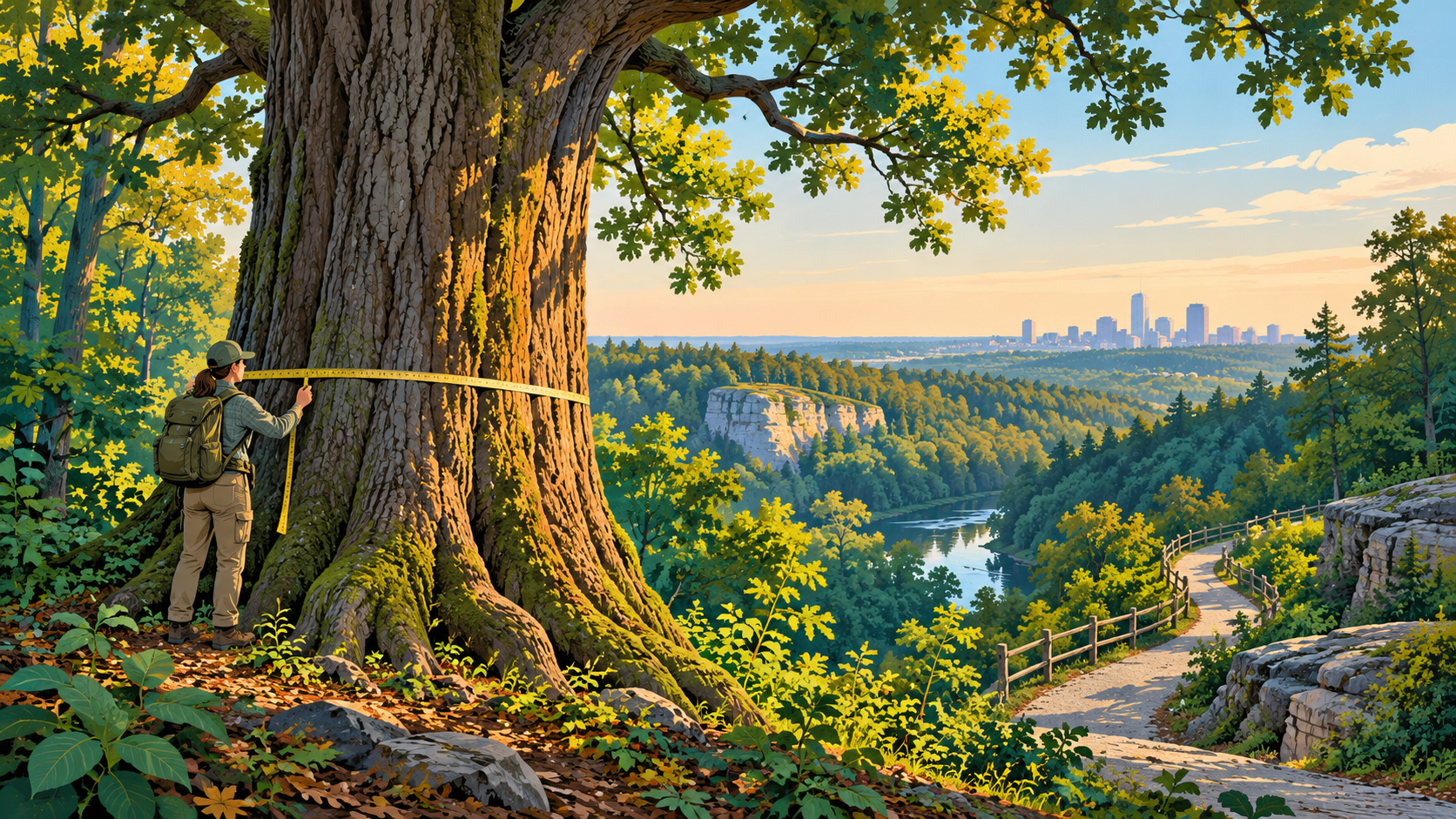
If measuring interests the group, American Forests’ introduction to champion-tree hunting explains the role of circumference, height and crown spread. Treat informal measurements as learning exercises rather than an official nomination.
Stay on permitted routes, leave bark and roots undisturbed and avoid attaching anything to a tree. Ask permission before entering private property. The aim is an enjoyable encounter with nature, not a photograph or measurement obtained at the expense of the site.
Afterwards, record what the group actually saw and distinguish it from what an older listing reported. That small habit keeps a personal trip report useful for the next visitor.
Frequently asked questions
Is this a confirmed organised event?
No. The search phrase does not establish an organiser, date or school affiliation.
Should I centre the whole day on one tree?
Only after confirming its location and permitted access. Keep a flexible alternative.
Do I need professional equipment?
Not for an informal observation walk. Formal measurements should follow programme guidance.
Can I use an old article for current access rules?
Use it as background, then confirm current arrangements with the land manager.
What should children learn from the outing?
Observation and respect for trees are useful goals without needing to certify a champion.
